Group of Seven policy don't change outlook for the U.S. dollar
Global Market
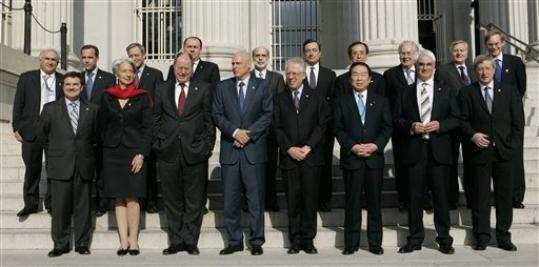
The concern that Group of Seven expressed about swings in exchange rates wasn't enough to change outlook for the U.S. dollar. Analysts maintained the dollar forecasts after the G-7's changed the wording of their statement to reflect the dollar's decline against the euro and the yen. The dollar fell to $1.5818 per euro.
The G-7 added the language after the dollar's decline accelerated against the euro and the yen. Bank of America said the dollar may fall beyond $1.60. The Royal Bank of Scotland Plc predicts the dollar will trade at $1.63 at September.
Since August, the U.S. Federal Reserve has lowered its rate 3 percentage points to 2.25 percent, to forestall a recession. Meanwhile, European Central Bank has kept its rate at 4 percent amid the fastest inflation in almost 16 years.
The Dollar Index has tumbled 6.5 percent amid concern that U.S. economy will move into a recession.
Stock Market
U.S. stocks fell after Wachovia Corp. reported an unexpected first-quarter loss and Goldman Sachs predicted more disappointing earnings will drive the market lower.
Wachovia retreated after cutting its dividend and plans to raise $7 billion to replenish capital depleted by mortgage losses. Citigroup Inc. fell after analyst said a slowdown in consumer finance and capital markets will hurt profits. International Business Machines Corp. and Exxon Mobil Corp. gained, helping to limit losses in the DJIA.
The Standard & Poor's 500 Index slipped 4.51 points to 1,328.32. The Dow lost 23.36 to 12,302.06. The Nasdaq Composite Index fell 14.42 to 2,275.82. Profits at S&P 500 companies are expected to fall 12.3 percent in the first quarter and 3.8 percent in the second.
A rally in energy companies led the market higher after oil prices advanced to a record, a report showed gas-station receipts propped up sales at retailers and the offshore Carioca may be the world's third-largest oil field.
Wachovia sank $2.26 to $25.55 after reporting a loss of 20 cents a share because of subprime mortgage holdings.
Citigroup fell 85 cents to $22.51. Analyst cut their earnings estimates, citing a slowdown in consumer finance and capital-markets growth.
Federated Investors Inc. fell $1.10 to $33.09. They said it earned less than analysts estimated as it waived fees on the funds because the securities yield that they hold declined.
News Corp. is losing 85 cents to $17.57. Analysts cut their stock outlook, citing concerns growth will slow and lowered their rating to market perform.
Scotts Miracle-Gro Co. lost 88 cents to $33.56. Their second-quarter profit fell because a late start to the growing season. Earnings will be about $1.14 to $1.18 a share.
Exxon led energy companies to gain as crude oil surpassed record, rising to $111.76 a barrel. Exxon added $1.08 to $89.70. Hess Corp. rose the most after Brazil's National Oil Agency said Carioca offshore may be the world's third-largest oil field. Hess rose $8.43 to $101.19. Transocean Inc. rose $6.81 to $151.89. Noble Corp. added $2.48 to $55.25.
Circuit City Stores Inc. jumped $1.07 to $4.97. Blockbuster Inc. made an unsolicited bid, worth $1.35 billion. Blockbuster is offering $6 a share, subject to due diligence. Blockbuster tumbled 32 cents $2.81. Wal-Mart Stores Inc. climbed 35 cents to $55.15.
Retail sales rose in March, reflecting increases in receipts at service stations as gasoline prices jumped. Purchases advanced 0.2 percent last month.
IBM added $1.28 to $117.28. Goldman raised share-price forecast and earnings estimate company.
Hewlett-Packard Co. rose 35 cents to $45.82. Merrill added personal computers to its U.S. first list. It will show margin improvement.
Northwest Airlines Corp. and Delta Air Lines Inc. led airline shares higher a talks said a merger deal may be announced tomorrow. Northwest rose 26 cents to $11.22. Delta gained 47 cents to $10.48.
NutriSystem Inc. added $1.31 to $19.52. They will be added to the S&P SmallCap 600 Index tomorrow.
Commodities
Oil
Crude oil was little changed after the Group of Seven Nations failed to back up the dollar's slide. The G-7 said that it would monitor exchange markets closely and cooperate as appropriate. The U.S. currency's decline has spurred interest in energy and metals as an inflation hedge. Gasoline gained on forecasts that a government report will show U.S. supplies fell.
Crude oil for May delivery was at $111.88 a barrel. Futures settle at $111.76. Gasoline for May delivery settled $2.8218 a gallon. U.S. gasoline demand increases during the summer, when Americans take vacations. The peak- consumption begins from the Memorial Day weekend in late May to Labor Day in early September. The G-7 didn't explicitly mention plans for intervention, to arrange purchases or sales of foreign exchange. The dollar traded at $1.5831 per euro.
Brent crude for May settlement gained $1.09 to close at $109.84 a barrel. Futures reached $110.01 a barrel. Gasoline stockpiles forecast to fell 1.8 million barrels. U.S. pump prices have followed futures higher. Regular gasoline declined 0.1 cent to $3.373 a gallon.
Royal Dutch Shell Plc restored the flow of oil through the Capline system. Eni SpA's Nigerian venture halted production following explosions near the area in the Delta state. Oil wells in Nigeria caught fire, causing about 5,000 barrels a day in lost production, because of sabotage.
Gold
Gold rose as the dollar's decline against the euro enhanced the appeal of the precious metal as an alternative investment. Silver also gained.
The dollar fell after Wachovia Corp. unexpectedly reported a first-quarter loss, fueling concern the credit crisis hasn't passed..
Gold futures for June delivery rose $1.70 to $928.70 an ounce. Silver futures for May delivery rose 10 cents to $17.79 an ounce. The euro rebounded to $1.5886. Gold's gains may be limited on sales by investors to cover losses in other markets.
The decline from the record is similar to the May 2006 drop, instead of the 1980 plunge that sent the metal into a bear market for two decades. Gold will average $900 an ounce this year, the bank said. Wide price fluctuations and a seasonal slowdown in demand from jewelers may undermine the price in the near term.
The concern that Group of Seven expressed about swings in exchange rates wasn't enough to change outlook for the U.S. dollar. Analysts maintained the dollar forecasts after the G-7's changed the wording of their statement to reflect the dollar's decline against the euro and the yen. The dollar fell to $1.5818 per euro.
The G-7 added the language after the dollar's decline accelerated against the euro and the yen. Bank of America said the dollar may fall beyond $1.60. The Royal Bank of Scotland Plc predicts the dollar will trade at $1.63 at September.
Since August, the U.S. Federal Reserve has lowered its rate 3 percentage points to 2.25 percent, to forestall a recession. Meanwhile, European Central Bank has kept its rate at 4 percent amid the fastest inflation in almost 16 years.
The Dollar Index has tumbled 6.5 percent amid concern that U.S. economy will move into a recession.
Stock Market
U.S. stocks fell after Wachovia Corp. reported an unexpected first-quarter loss and Goldman Sachs predicted more disappointing earnings will drive the market lower.
Wachovia retreated after cutting its dividend and plans to raise $7 billion to replenish capital depleted by mortgage losses. Citigroup Inc. fell after analyst said a slowdown in consumer finance and capital markets will hurt profits. International Business Machines Corp. and Exxon Mobil Corp. gained, helping to limit losses in the DJIA.
The Standard & Poor's 500 Index slipped 4.51 points to 1,328.32. The Dow lost 23.36 to 12,302.06. The Nasdaq Composite Index fell 14.42 to 2,275.82. Profits at S&P 500 companies are expected to fall 12.3 percent in the first quarter and 3.8 percent in the second.
A rally in energy companies led the market higher after oil prices advanced to a record, a report showed gas-station receipts propped up sales at retailers and the offshore Carioca may be the world's third-largest oil field.
Wachovia sank $2.26 to $25.55 after reporting a loss of 20 cents a share because of subprime mortgage holdings.
Citigroup fell 85 cents to $22.51. Analyst cut their earnings estimates, citing a slowdown in consumer finance and capital-markets growth.
Federated Investors Inc. fell $1.10 to $33.09. They said it earned less than analysts estimated as it waived fees on the funds because the securities yield that they hold declined.
News Corp. is losing 85 cents to $17.57. Analysts cut their stock outlook, citing concerns growth will slow and lowered their rating to market perform.
Scotts Miracle-Gro Co. lost 88 cents to $33.56. Their second-quarter profit fell because a late start to the growing season. Earnings will be about $1.14 to $1.18 a share.
Exxon led energy companies to gain as crude oil surpassed record, rising to $111.76 a barrel. Exxon added $1.08 to $89.70. Hess Corp. rose the most after Brazil's National Oil Agency said Carioca offshore may be the world's third-largest oil field. Hess rose $8.43 to $101.19. Transocean Inc. rose $6.81 to $151.89. Noble Corp. added $2.48 to $55.25.
Circuit City Stores Inc. jumped $1.07 to $4.97. Blockbuster Inc. made an unsolicited bid, worth $1.35 billion. Blockbuster is offering $6 a share, subject to due diligence. Blockbuster tumbled 32 cents $2.81. Wal-Mart Stores Inc. climbed 35 cents to $55.15.
Retail sales rose in March, reflecting increases in receipts at service stations as gasoline prices jumped. Purchases advanced 0.2 percent last month.
IBM added $1.28 to $117.28. Goldman raised share-price forecast and earnings estimate company.
Hewlett-Packard Co. rose 35 cents to $45.82. Merrill added personal computers to its U.S. first list. It will show margin improvement.
Northwest Airlines Corp. and Delta Air Lines Inc. led airline shares higher a talks said a merger deal may be announced tomorrow. Northwest rose 26 cents to $11.22. Delta gained 47 cents to $10.48.
NutriSystem Inc. added $1.31 to $19.52. They will be added to the S&P SmallCap 600 Index tomorrow.
Commodities
Oil
Crude oil was little changed after the Group of Seven Nations failed to back up the dollar's slide. The G-7 said that it would monitor exchange markets closely and cooperate as appropriate. The U.S. currency's decline has spurred interest in energy and metals as an inflation hedge. Gasoline gained on forecasts that a government report will show U.S. supplies fell.
Crude oil for May delivery was at $111.88 a barrel. Futures settle at $111.76. Gasoline for May delivery settled $2.8218 a gallon. U.S. gasoline demand increases during the summer, when Americans take vacations. The peak- consumption begins from the Memorial Day weekend in late May to Labor Day in early September. The G-7 didn't explicitly mention plans for intervention, to arrange purchases or sales of foreign exchange. The dollar traded at $1.5831 per euro.
Brent crude for May settlement gained $1.09 to close at $109.84 a barrel. Futures reached $110.01 a barrel. Gasoline stockpiles forecast to fell 1.8 million barrels. U.S. pump prices have followed futures higher. Regular gasoline declined 0.1 cent to $3.373 a gallon.
Royal Dutch Shell Plc restored the flow of oil through the Capline system. Eni SpA's Nigerian venture halted production following explosions near the area in the Delta state. Oil wells in Nigeria caught fire, causing about 5,000 barrels a day in lost production, because of sabotage.
Gold
Gold rose as the dollar's decline against the euro enhanced the appeal of the precious metal as an alternative investment. Silver also gained.
The dollar fell after Wachovia Corp. unexpectedly reported a first-quarter loss, fueling concern the credit crisis hasn't passed..
Gold futures for June delivery rose $1.70 to $928.70 an ounce. Silver futures for May delivery rose 10 cents to $17.79 an ounce. The euro rebounded to $1.5886. Gold's gains may be limited on sales by investors to cover losses in other markets.
The decline from the record is similar to the May 2006 drop, instead of the 1980 plunge that sent the metal into a bear market for two decades. Gold will average $900 an ounce this year, the bank said. Wide price fluctuations and a seasonal slowdown in demand from jewelers may undermine the price in the near term.


Comments